





 Free shipping
Free shipping
Free shipping
February 1931. During a cold winter night that brings a hush to Providence, Rhode Island, one man is wide awake. Leaning over his desk, he covers page after page with writing – sometimes in ink, sometimes in pencil for revisions – as the pile of sheets stacks up. Shadows dance around him from the glow of his candle, which flickers with the slightest breath.
This man is Howard Phillips Lovecraft, who returned to his hometown in 1926 after several years in New York and Cleveland, following an unhappy marriage. Lovecraft tried to make a name for himself from his writing, in a Victorian-style house located at 10 Barnes Street which he was forced to leave for lack of funds soon after. In 1926, he was convinced that his latest story would appeal to Farnsworth Wright, the editor of Weird Tales magazine. He came up with a title, quickly scribbled down a few lines on the structure of his novel, and was midway through a plot that would take his reader on a terrifying expedition to the Antarctic Circle.
Less than a month later, on March 22, 1931, H. P. Lovecraft set down the final words ‘Tekeli-li! Tekeli-li! The End’, he wrote, probably with satisfaction, and even relief, on folio number 80. At this point, Lovecraft had no idea that it would take five long years for his novel to be published.
A scientific expedition from Miskatonic University leaves Boston, Massachusetts, for Antarctica. Teachers, assistants, dogs, drilling equipment, whalers: the journey takes two months to reach the foot of unknown, hostile mountains. While examining fossils, a small advance group of scientists is savagely decimated by a mysterious force. Professor Dyer and his student Danforth investigate their disappearance, which leads to the discovery of an ancient and abandoned stone city, and the history of the Ancients and the Shoggoths. The confrontation between mankind and these terrifying creatures belonging to the mountains of madness leads to inevitable tragedy…

The expression ‘mountains of madness’ appears in a story by Lord Dunsany, known to be one of Lovecraft’s greatest influences, but it's not certain that the latter remembered it when penning his novel. According to S. T. Joshi, the title refers to Lovecraft's belief that the truth about the universe is likely to provoke madness in man, such truth revealing man’s insignificance in the cosmos.
In 1931, Lovecraft was in his forties and in frail health – he had only six years to live, and would die of illness in 1937. As a writer, he had already published short stories, including Dagon (written in July 1917 and published in November 1919 in The Vagrant magazine, then in Weird Tales in October 1923) and The Call of the Cthulhu (written in 1926 and published in February 1928 in Weird Tales). He wrote The Case of Charles Dexter Ward in 1928, but the story was not published until December 1941, also in Weird Tales.
Why did Lovecraft decide to write At the Mountains of Madness at this particular stage of his life? While it's well known that he had been fascinated by the Antarctic continent since childhood, and that he followed the scientific expeditions carried out at the turn of the century with great interest, David Camus and other specialists believe that he may have been influenced by reading what he considered a very mediocre short story in Weird Tales in November 1930, entitled ‘A Million Years After’ by Katherine Metcalf Roof. The writer picked up his pen and decided to write his own Antarctic novel.
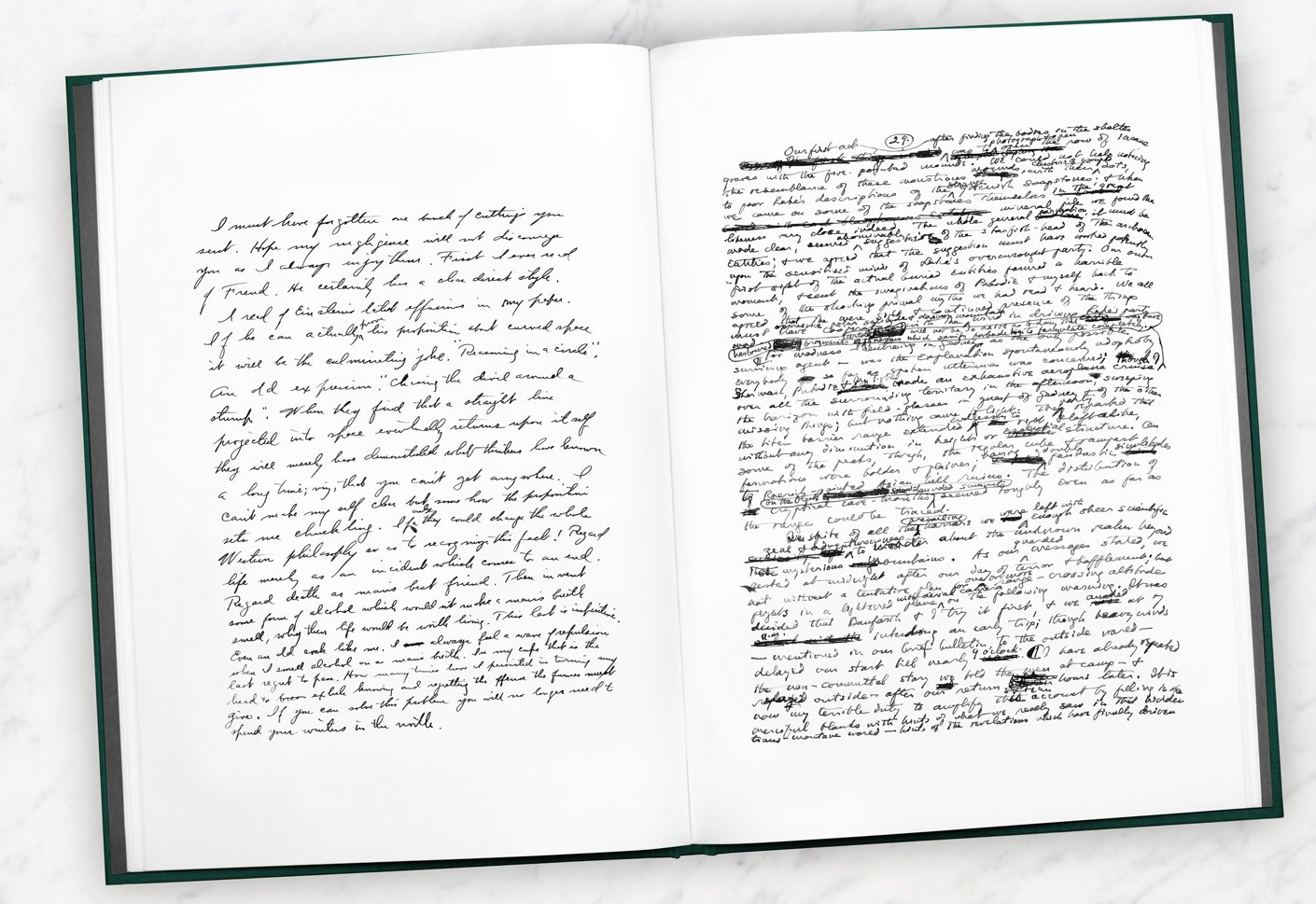
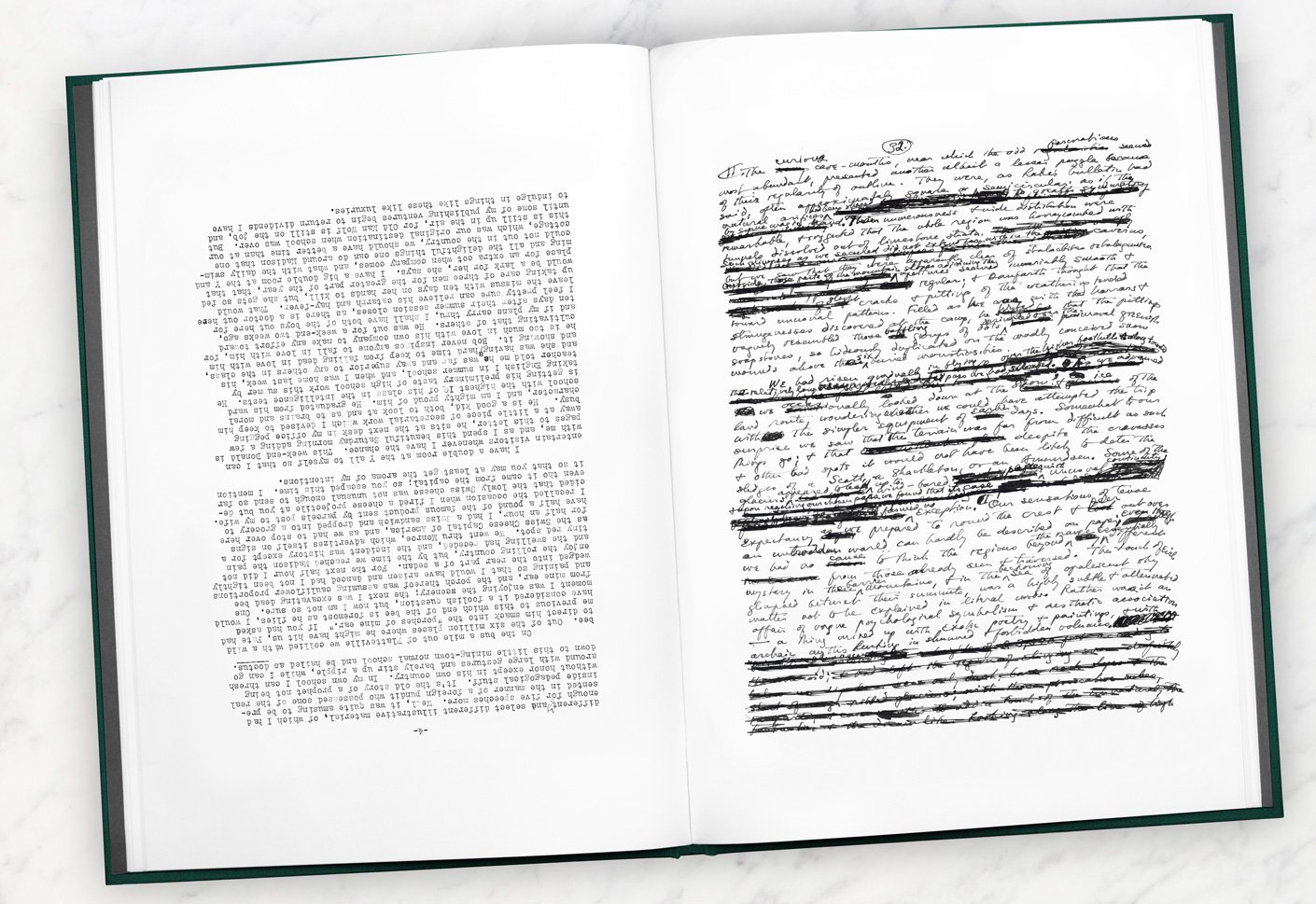
The manuscript was drafted on the back of various pages of correspondence, as Lovecraft had to be thrifty with his use of materials. He did, however, use the highest-quality paper where possible, as well as choosing the best of the advertisements that he was inundated with at the time to scribble on. The reader will discover in this manuscript typed letters from James F. Morton (from the Paterson museum), J. Morris Robinson (on the letterhead of Philadelphia's Bellevue-Stratford) and Maurice W. Moe.
H. P. Lovecraft himself typed the manuscript of At the Mountains of Madness, which was completed on 1 May, 1931 and is held by the John Hay Library. ‘It does not appear that Lovecraft made any significant changes to the text of the novel until his agent, Julius Schwartz, submitted it to Astounding Stories in the autumn of 1935. In fact, I suspect Lovecraft did not look at the text in the meantime, because it reminded him of the painful rejection he had received from Weird Tales,’ explains S. T. Joshi. It was his agent, Julius Schwartz, who resubmitted the novel to Astounding Stories magazine in the autumn of 1935. At the Mountains of Madness was finally published in serial form in February, March, and April of the following year.
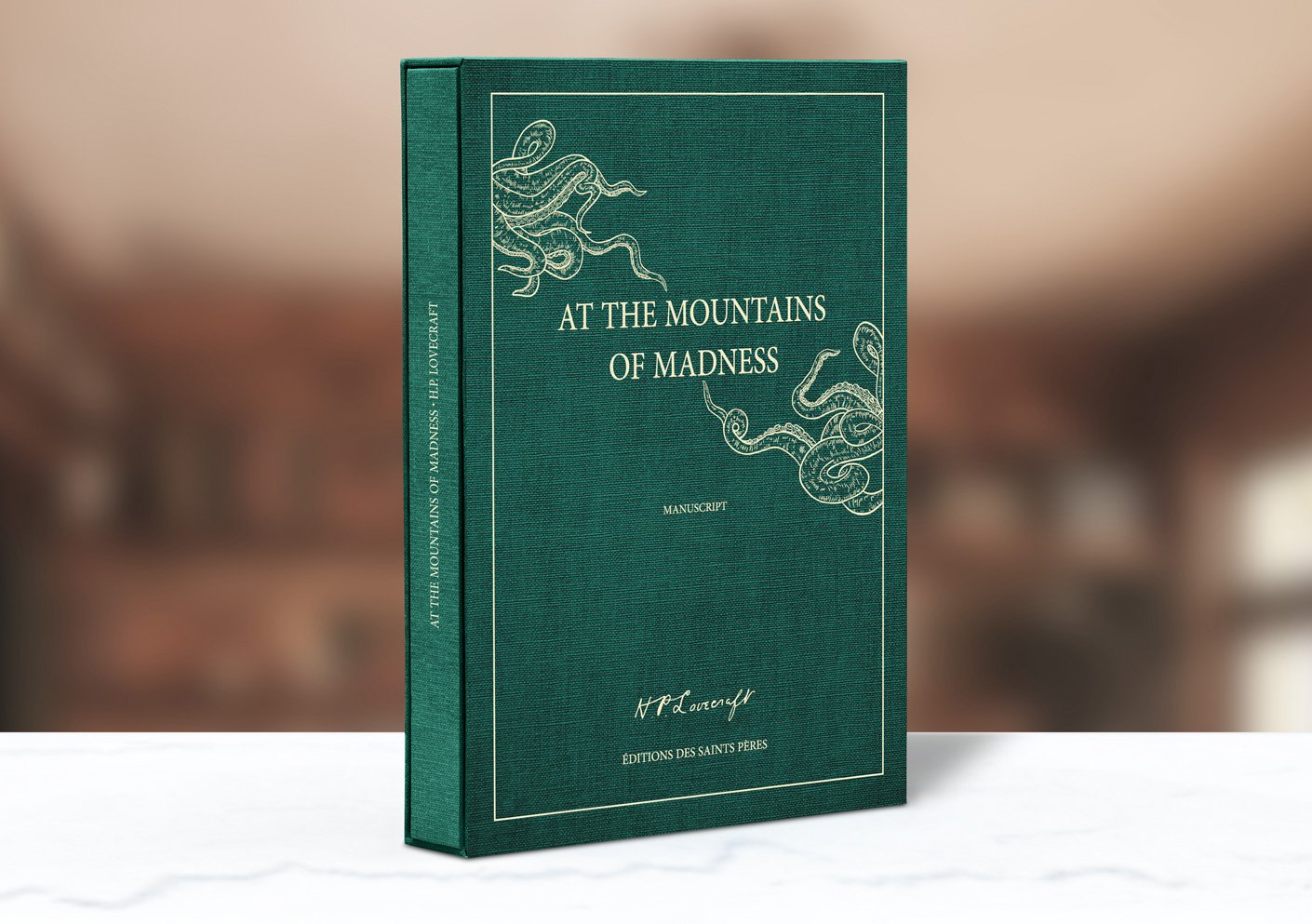
The text published in Astounding Stories differs in several aspects from the original manuscript version. Firstly, Lovecraft wished to correct an error he made in his description of Antarctica (two land masses separated by a frozen sea: a hypothesis that proved false following an aerial exploration of the continent in 1935). Numerous passages are crossed out by him (see, for example, pages 10, 49, 61 and 80). In addition, the editors of Astounding Stories made modifications of which Lovecraft was unaware, dividing his long paragraphs to make them shorter, altering his punctuation and eliminating his British spelling – even going so far as to eliminate around 1,000 words from the end of the novel. One can imagine the author's fury when he discovered this between the pages of the magazine.
The John Hay Library at the prestigious Brown University houses a remarkable collection of rare books, editions and manuscripts. On his death, Lovecraft commissioned R. H. Barlow to be his literary executor. Although Barlow was not mentioned in Lovecraft's will, he was entrusted with this important task by Lovecraft's aunt. Barlow donated most of Lovecraft's manuscripts, archives and correspondence to the John Hay Library.
S. T. Joshi is a leading authority on H. P. Lovecraft, Ambrose Bierce, H. L. Mencken, and other writers, mostly in the realms of supernatural and fantasy fiction. He has edited corrected editions of the works of Lovecraft, several annotated editions of Bierce and Mencken, and has written such critical studies as The Weird Tale (1990) and The Modern Weird Tale (2001). His award-winning biography, H. P. Lovecraft: A Life (1996), has already become a collector’s item. An expanded and updated version, I Am Providence: The Life and Times of H. P. Lovecraft, was published in 2 volumes in 2010.
David Camus has worked in the publishing industry since his twenties as an agent, publisher, author and translator. His first novel series, the award-winning The Book of the Cross, was published from 2005-2009 (Robert Laffont) and has been translated into several languages. David has travelled widely to speak about his books, and for research. A specialist in H. P. Lovecraft, in 2010 he undertook the monumental task of translating his complete works. In January 2022 Mnémos published Les Contrées du rêve, the first of seven volumes that will form the complete set. David’s new novel, Le Pays qui descend, was published by Robert Laffont in October 2023. He now lives between France, Poland and the realms of Lovecraft.
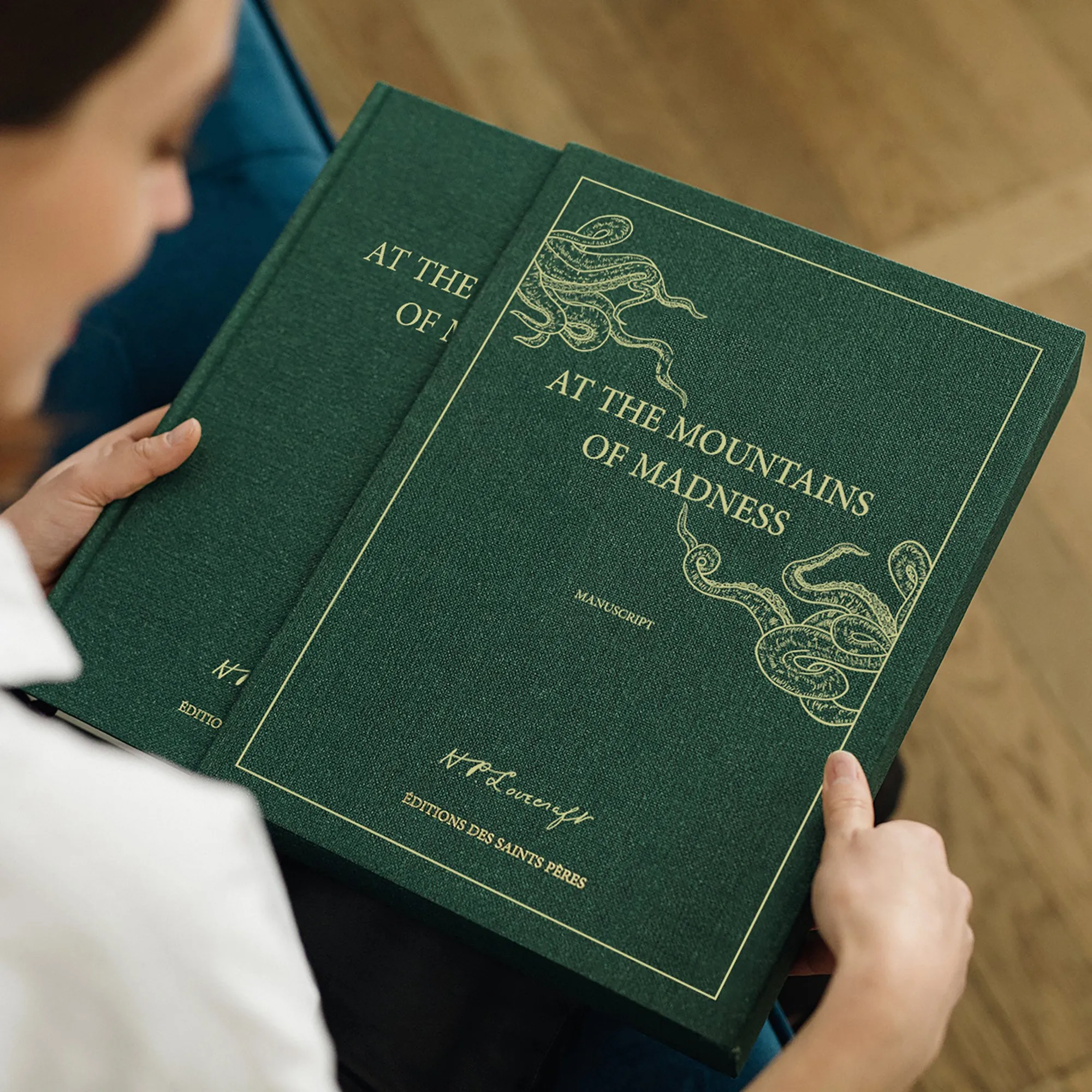
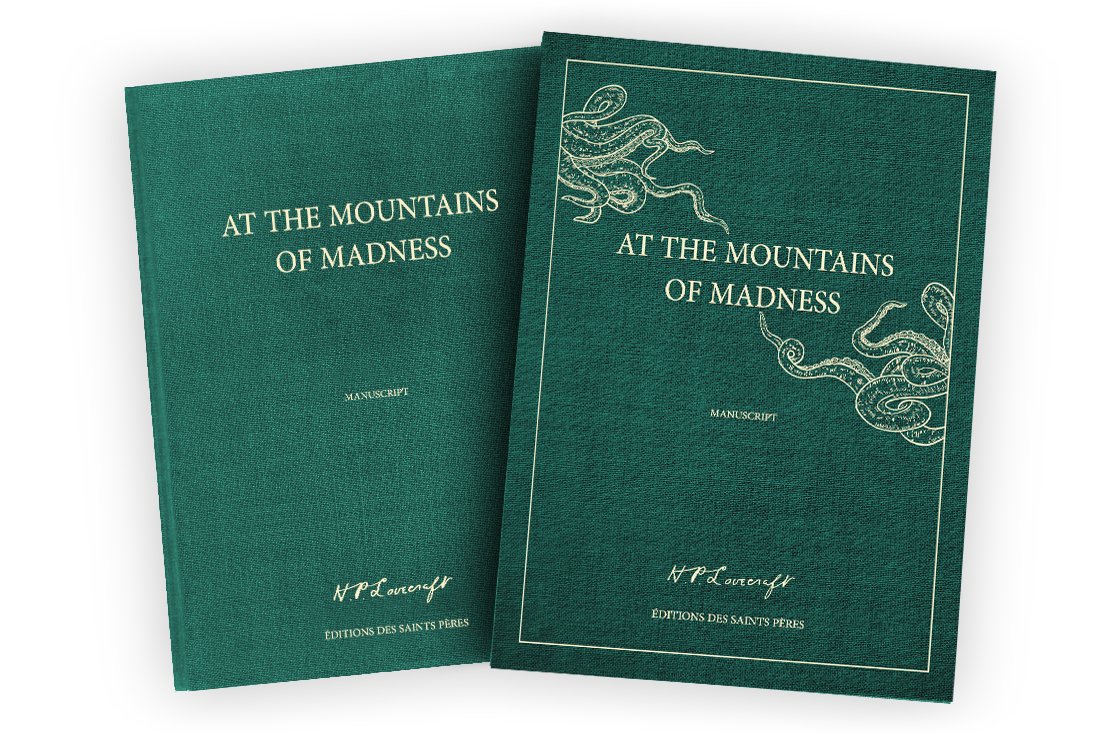
Deluxe edition
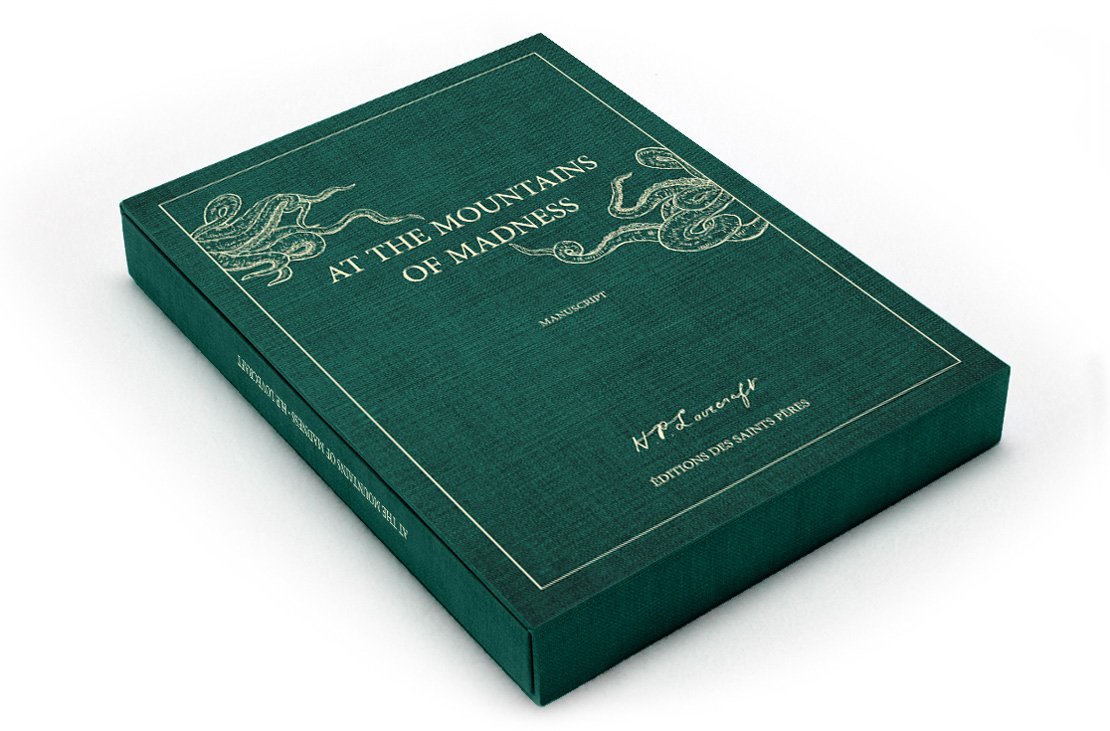
Numbered from 1 to 1,000, this Bottle Green edition is presented in a large format handmade slipcase.
Printed with vegetable-based ink on eco-friendly paper, each book is bound and sewn using only the finest materials.


