

 Free shipping
 on all orders 

Free shipping
Free shipping
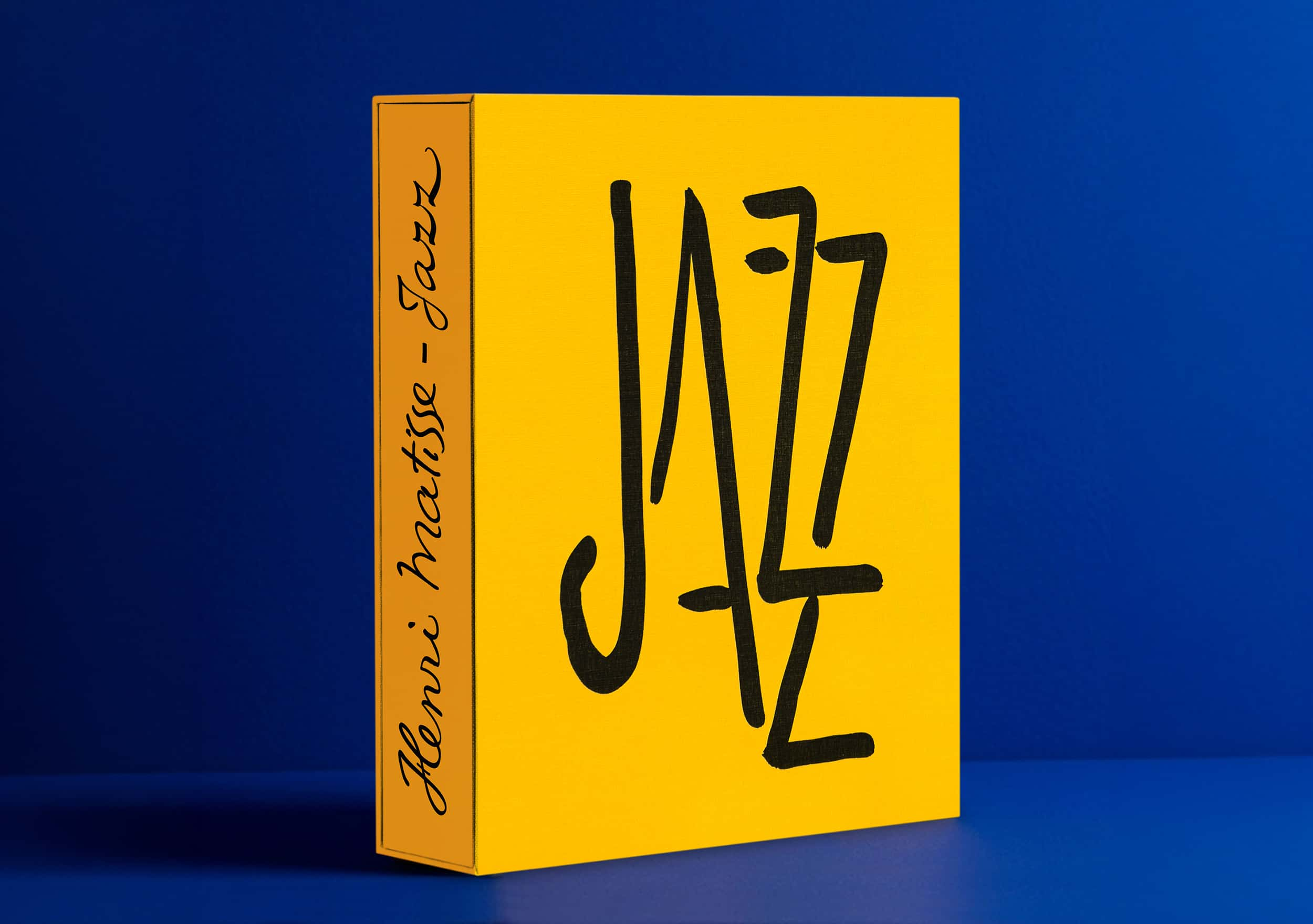
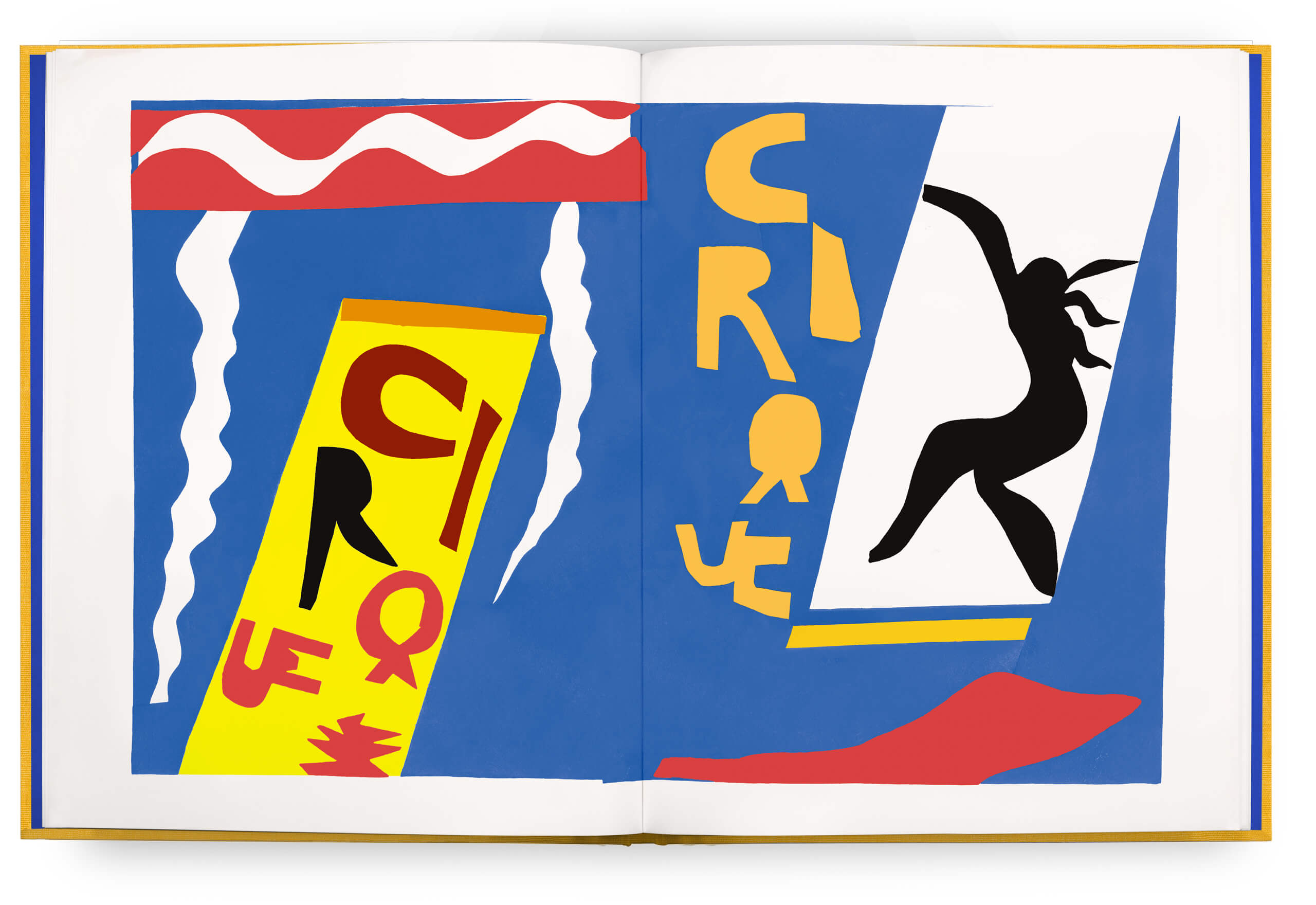
Matisse’s Jazz first appeared in 1947, the fruit of a long artistic, technical and personal development. From its publication up to the present day, this astonishing work has captivated the public, critics, and specialists alike.
Is it because Jazz represents the crowning glory of the career of a painter who embodied audacity and modernity? Or because this creative triumph symbolises the rebirth of a man weakened by illness who, amid the Second World War, reinvented his artistic process?
In 1918, the poet and theorist Guillaume Apollinaire praised Matisse's dazzling instinct, as well as his quest for an ever-increasing simplicity in his work (see Art Chronicles, 1902-1918). These tributes would prove to be equally relevant to Jazz, three decades later.
In 1943, while living in the south of France and encouraged by the publisher Tériade, with whom he had been collaborating for several years, Henri Matisse first began work on Jazz. Tériade, who harboured a special admiration for the illuminated manuscripts of the Middle Ages, dreamed of seeing a "painted manuscript" created by Matisse. This wish was only amplified when Matisse created a cover for the magazine Verve in the summer of 1939 and, at the editor’s request, the idea for Jazz gradually took shape.
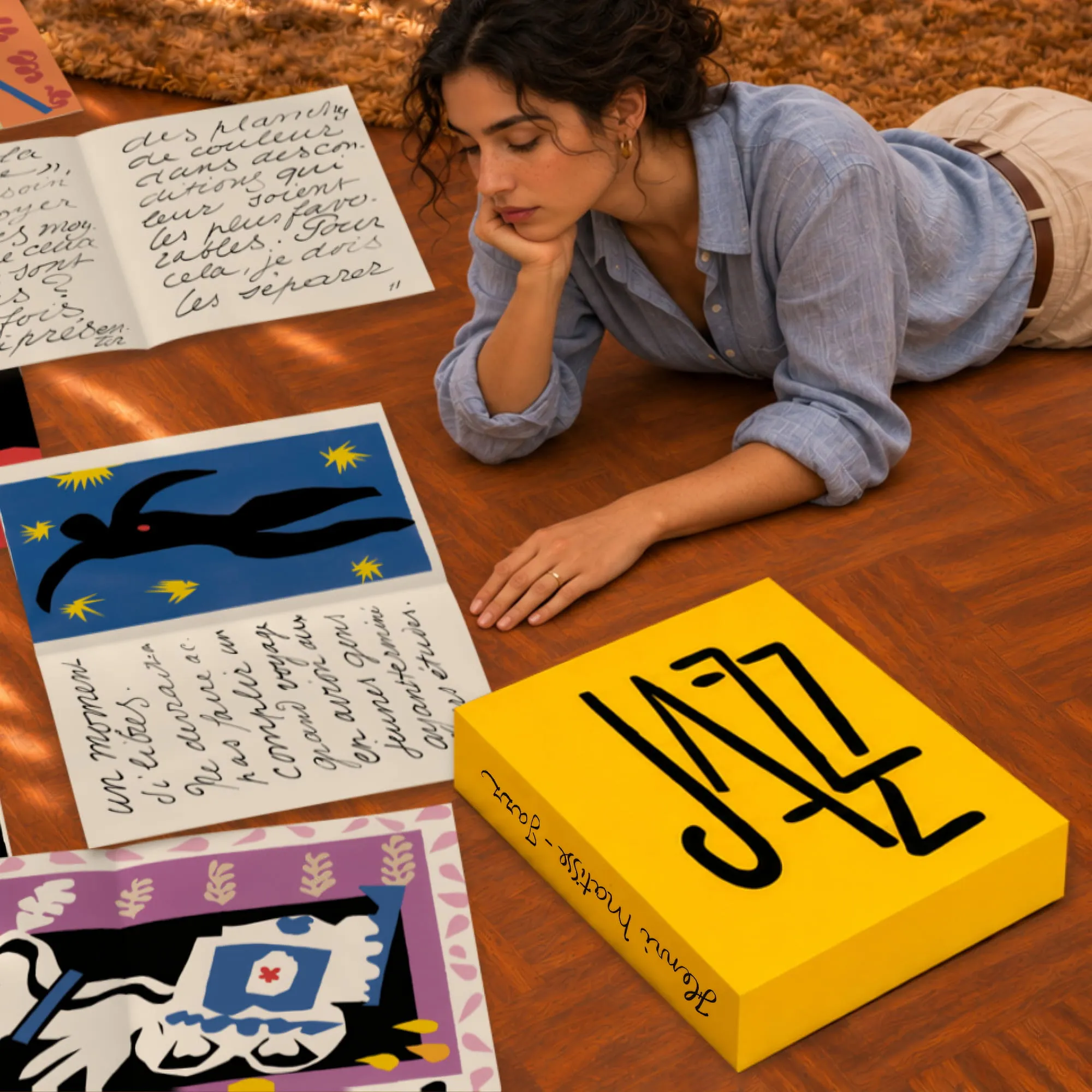
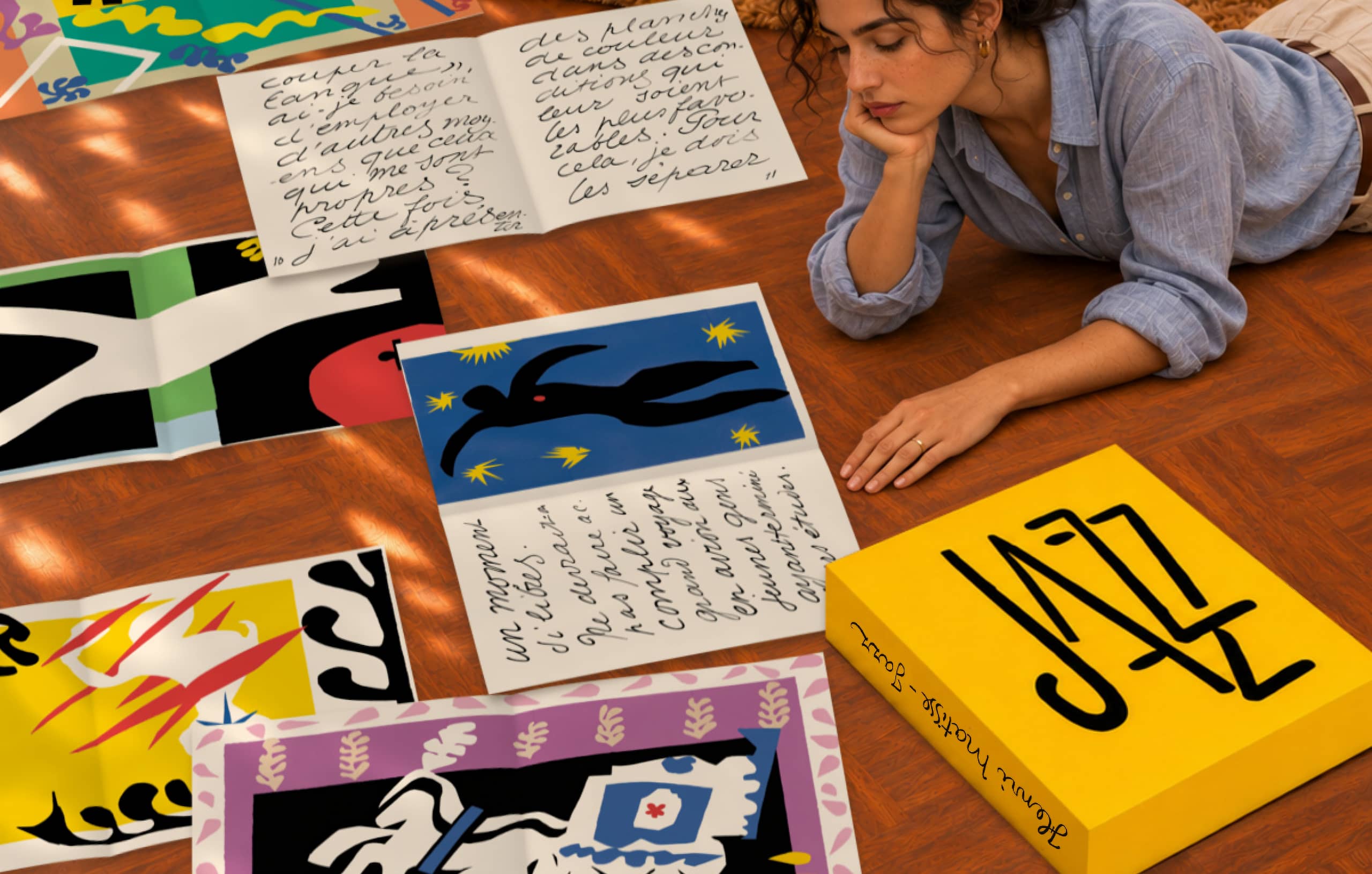
Matisse decided to use the technique of “paper cut-outs”, which he had already experimented with in the 1920s and 1930s for previous projects. Armed with large scissors, the artist cut and "drew" into sheets of paper that had been pre-painted with gouache, as if to extract their very essence.
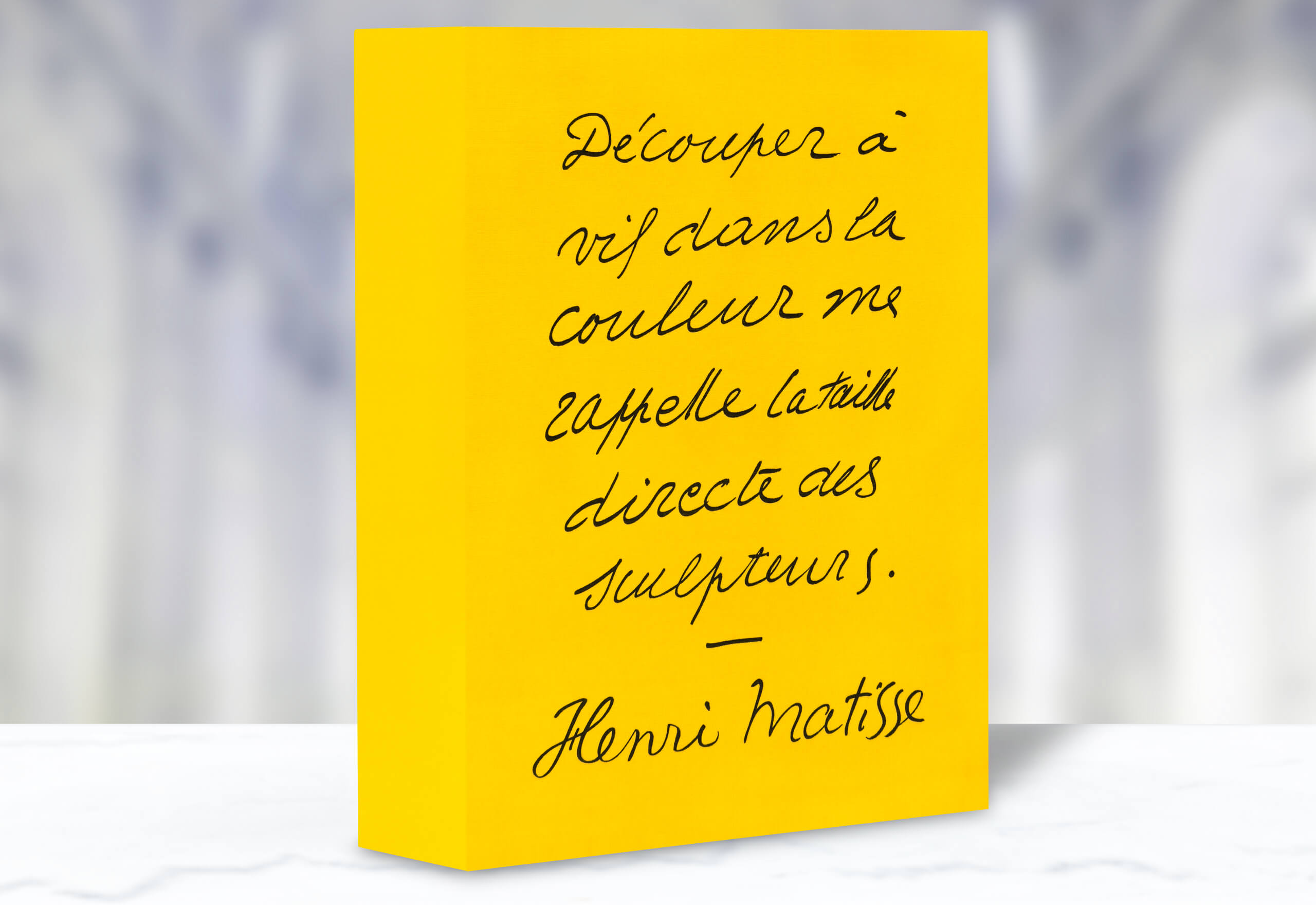
"Cutting directly into the colour reminds me of the direct carving of sculptors"
“This technique of paper cutting instils in me a very high passion for painting, because by completely renewing myself, I believe I have found one of the main points of artistic aspiration and fixation of our time. In creating these coloured cut-outs, it seems to me that I am happily anticipating what is to come. Never, I believe, have I felt such balance as when creating these cut-outs. But I know that it is much later that people will realise how much what I am doing today was in harmony with the future,” we can read on the Maison Matisse website.*
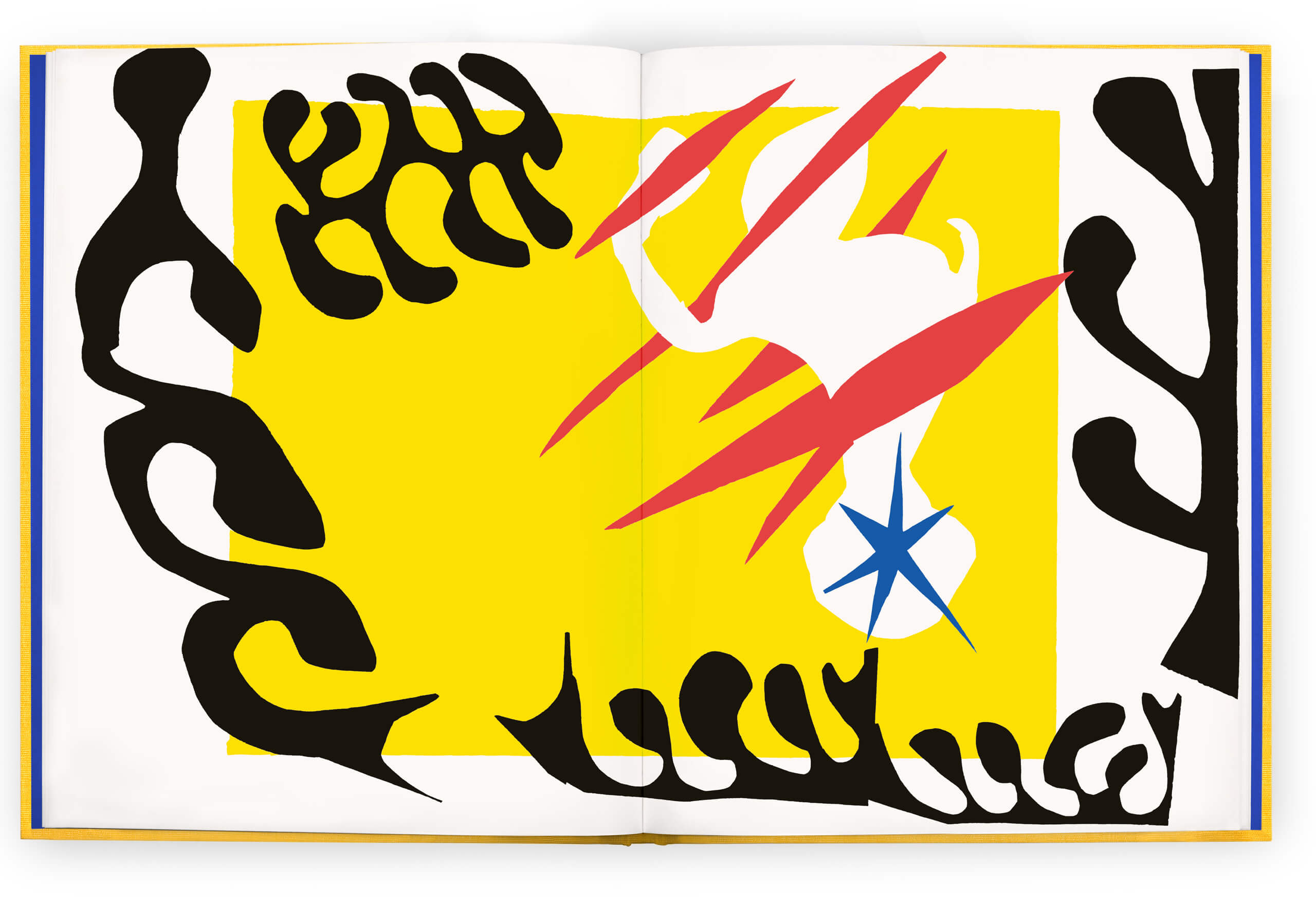
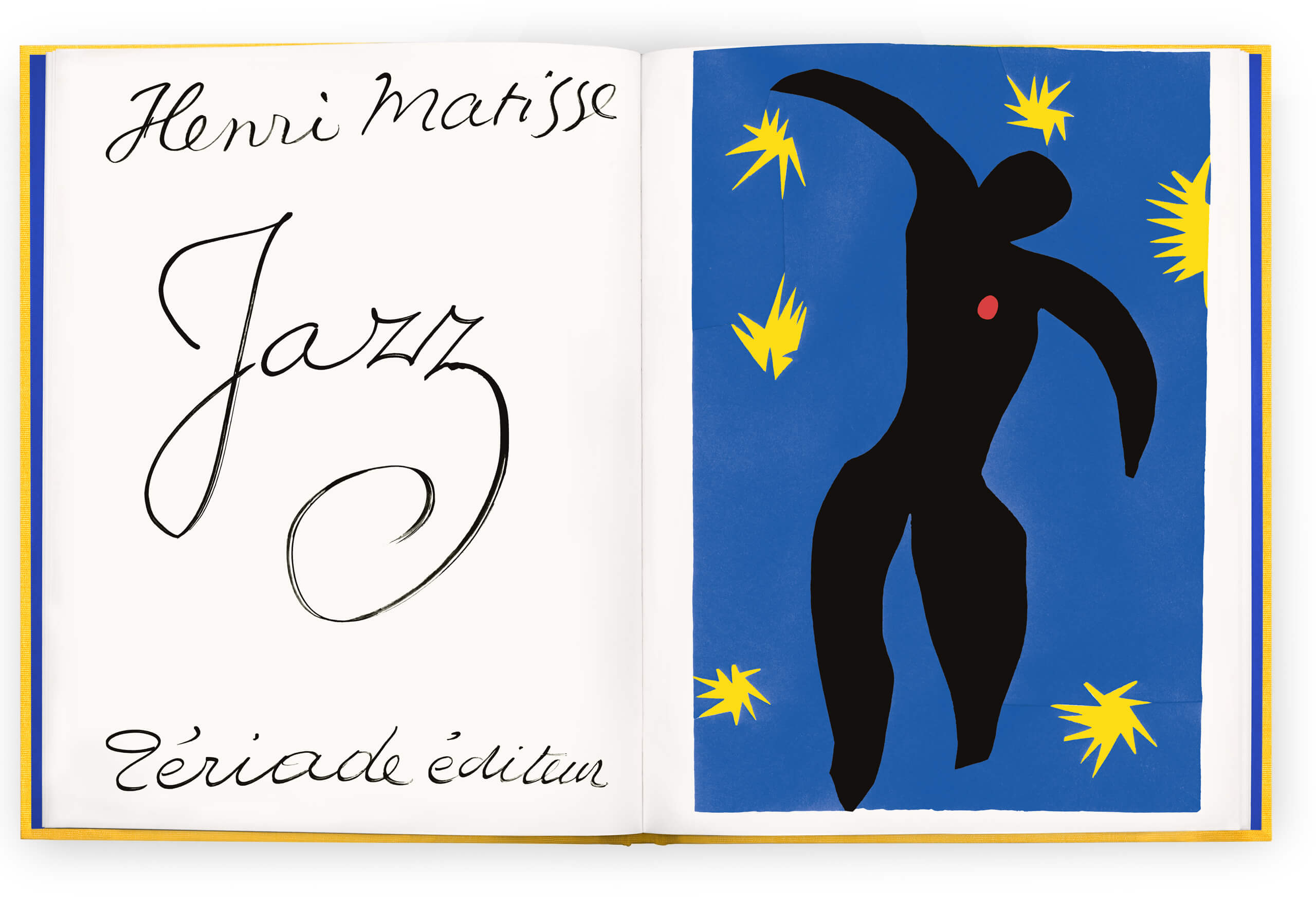
The first panels to emerge were ‘The Clown’ and ‘The Slide.’ Originally entitled Circus, Matisse renamed the project Jazz. These images, with their intensely vivid tones, emerged from crystallized memories of the circus, folk tales, and travels, as Matisse explains through the text.
Childhood reminiscences, a stay in Tahiti, and the evocation of past work infuse Jazz with their energy, representing a collision between the freshness of instinct and the maturity of experience.
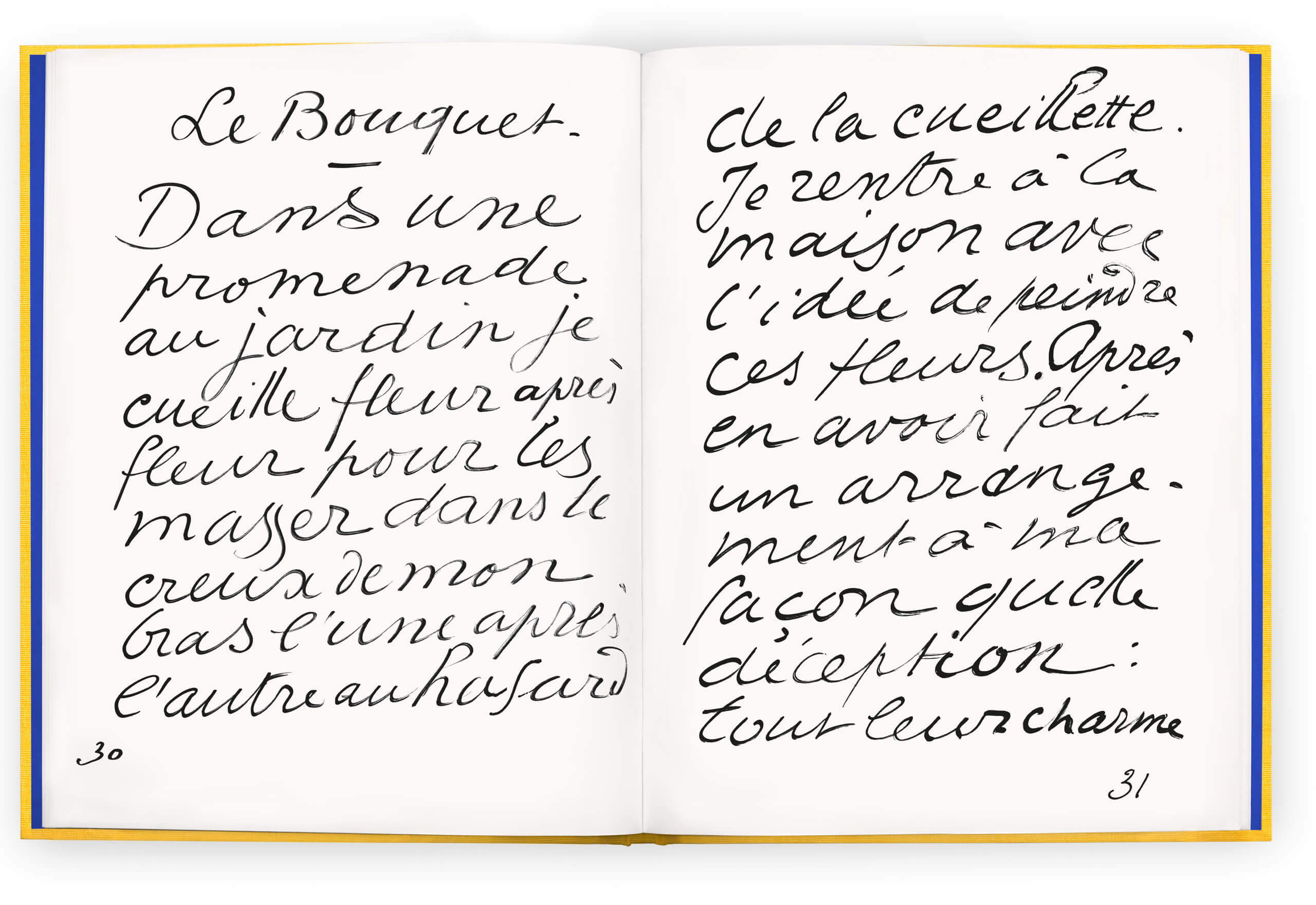
During the summer of 1946, Matisse wrote notes using a sharpened reed and India ink to punctuate his cut-out gouaches:
“I made these pages of writing to soothe the simultaneous reactions of my chromatic and rhythmic improvisations, the pages forming a kind of ‘soundscape’ that carries them, surrounds them, and thus protects their particularities.”
Matisse’s handwritten text accompanies the colours “like asters help in the composition of a more important bouquet of flowers.” The artist also asks the reader to be as indulgent toward these notes as one should be toward the writings of painters.
From reflections on the artist’s body propelled into the act of creation, to warnings, we are made privy to a liberated and emotive Matisse.
“If I have confidence in my drawing hand, it is because, while I was training it to serve me, I strove never to let it override my feelings. (…) The hand is merely an extension of sensitivity and intelligence.”
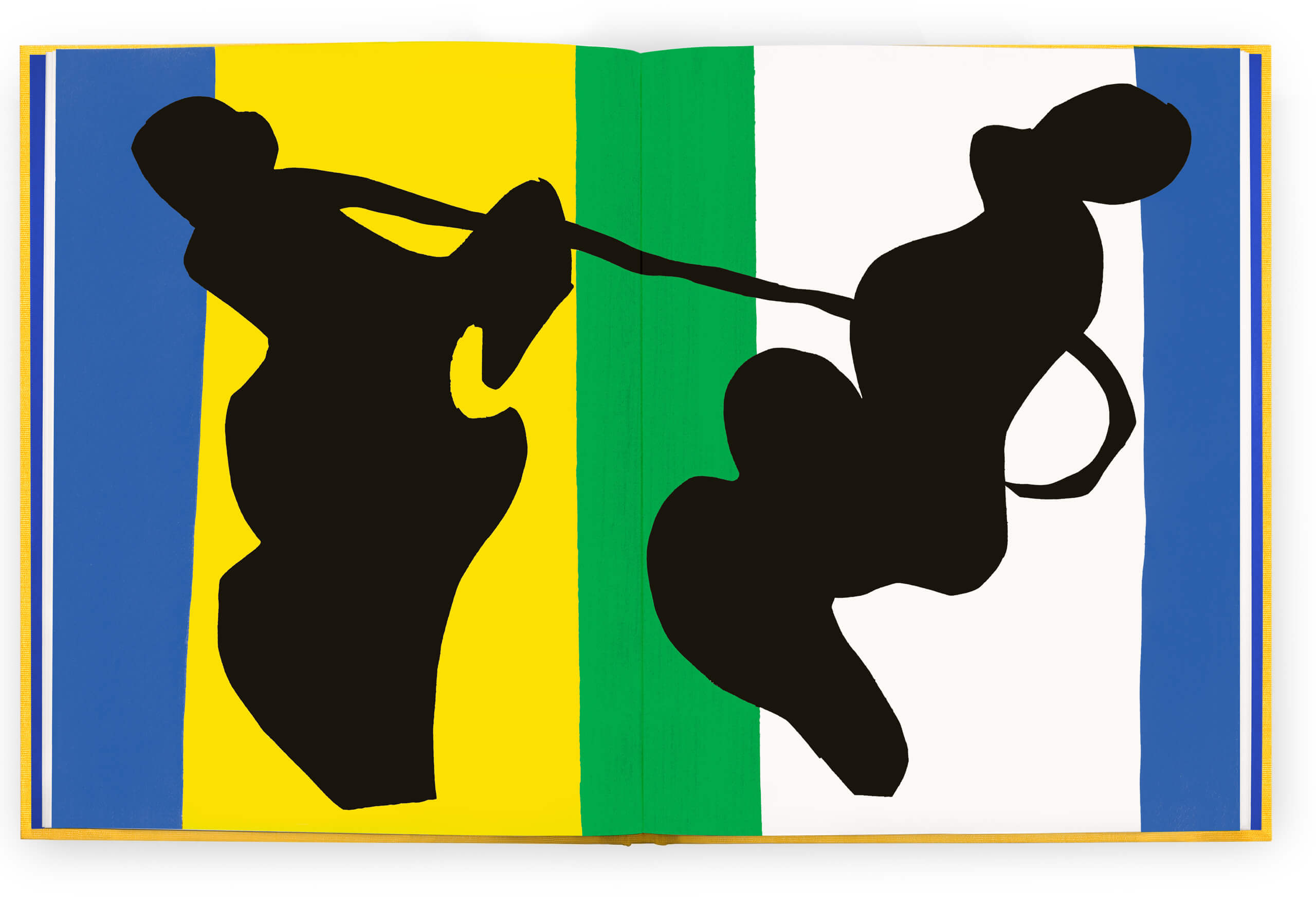
Numerous trials and several years were required to complete the book, which was published in a limited edition run in 1947. The colophon explains that the plates were "executed using stencils, based on collages and cutouts by Henri Matisse, by Edmond Vairel, who used the same Linel gouaches as the artist. The cover and manuscript pages were engraved and printed by Draeger Frères."
It was an international success, despite Henri Matisse's doubts throughout the production process and a certain disappointment after its publication. In the eyes of the painter, intimately familiar with each nuance of his brushstrokes, was the ever-evolving reproduction a betrayal of the carefree movements that had constituted his original artistic gesture?
True to their mission of reviving foundational manuscripts and the treasures of creation, in this latest facsimile, SP Books pays homage to Henri Matisse who, throughout this colourful volume, seems to open the doors of his studio and whisper to the reader:
There are flowers everywhere for those who wish to see them.
Born on the 31st of December 1869, in Le Cateau-Cambrésis, Henri Matisse was destined to become a notary's clerk; he discovered painting during a long convalescence. In Paris, having failed to gain admission to the École des Beaux-Arts, he attended classes at the École des Arts Décoratifs and the studio of Gustave Moreau, where the master told him: "You are going to simplify painting."
In 1896, he exhibited for the first time at the Salon des Cent and the Salon de la Société Nationale des Beaux-Arts. At the beginning of the 20th century, he became the leading figure of Fauvism; his work gained recognition from the public and critics alike, and was exhibited throughout the world.
Throughout his life, his travels further developed his sensitivity, his reflections, his quest for light, and his bold choices of media. Until his death, on the 3rd of November 1954, in Nice, "he demonstrated audacity, optimism and exacting standards, all qualities that led him to always think like a man of his time, open to the world and looking towards the future."*
*Maison Matisse website
Sources:
– Henri Matisse, Jazz. Éditions Verve (Paris, 1947).
– Henri Matisse, Jazz. Éditions Anthèse (Paris, 2005). Voir « À propos du Jazz de Matisse » par Dominique Szymusiak.
– Henri Matisse, Jazz. Galerie de l’Institut (Paris, 2021). Voir « Genèse, réalisation et réception de Jazz (1931-1948) » par Antoine Coron.
– Henri Matisse. Les papiers découpés. Dessiner avec des ciseaux. Sous la direction de Gilles Néret et Xavier-Gilles Néret. Éditions Taschen (Paris, 2022).
– Yves Peyré, Matisse : Jazz ou la peinture par le livre. Éditions Pagine d’Arte (Paris, 2012).
– Anciens et modernes, exposition, Grand Palais (1986).
– Jazz de Matisse, exposition 3 du cabinet d’art graphique, musée des Beaux-Arts de Dijon.
– Matisse, collections du musée national d’Art moderne (1989).
– Matisse et Tériade, exposition, musée Matisse (Le Cateau-Cambrésis 1997).
– Matisse, la collection du Centre Georges Pompidou, musée national d’Art moderne (1998).
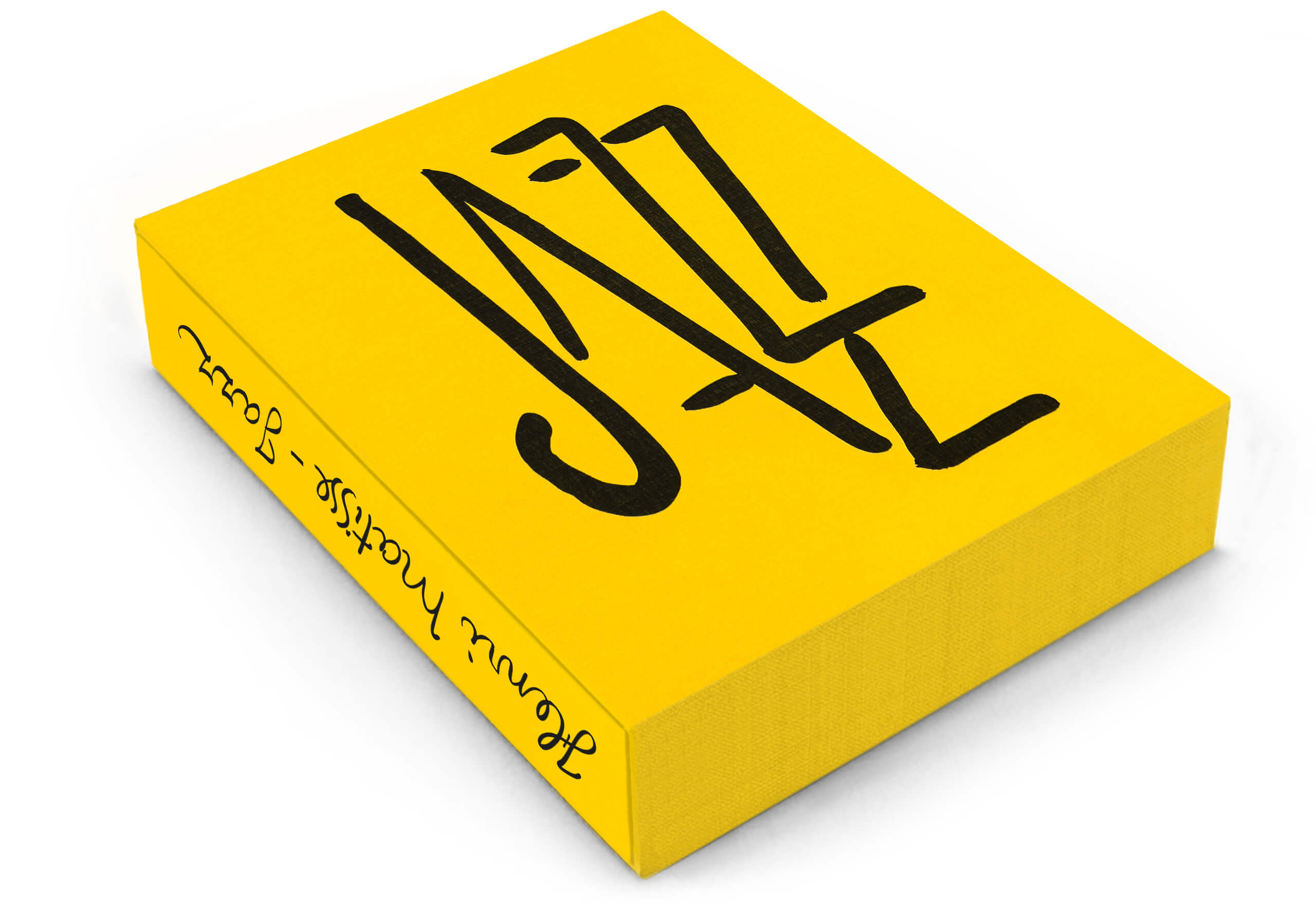
Fabriqué à la main
Chaque coffret est fabriqué à la main dans les ateliers Iscomée, à Ecommoy .
Chaque livre est numéroté de 1 à 1000.
Your review appreciation cannot be sent
Report comment
Report sent
Your report cannot be sent
Write your review
Review sent
Your review cannot be sent


