







 Free shipping
 on all orders 

Free shipping
Free shipping
In 1928, William Faulkner found himself at a turning point in his literary career. His third book, Flags in the Dust, was refused by Boni & Liveright, who had published his first two novels. Moreover, Horace Liveright discouraged Faulkner from shopping the book around to other publishers, judging it completely unsalvageable. Initially disheartened, Faulkner revealed the liberation that eventually came with this rejection:
“One day it suddenly seemed as if a door had clapped silently and forever to between me and all publishers’ addresses and book lists and I said to myself, Now I can write. Now I can just write.”
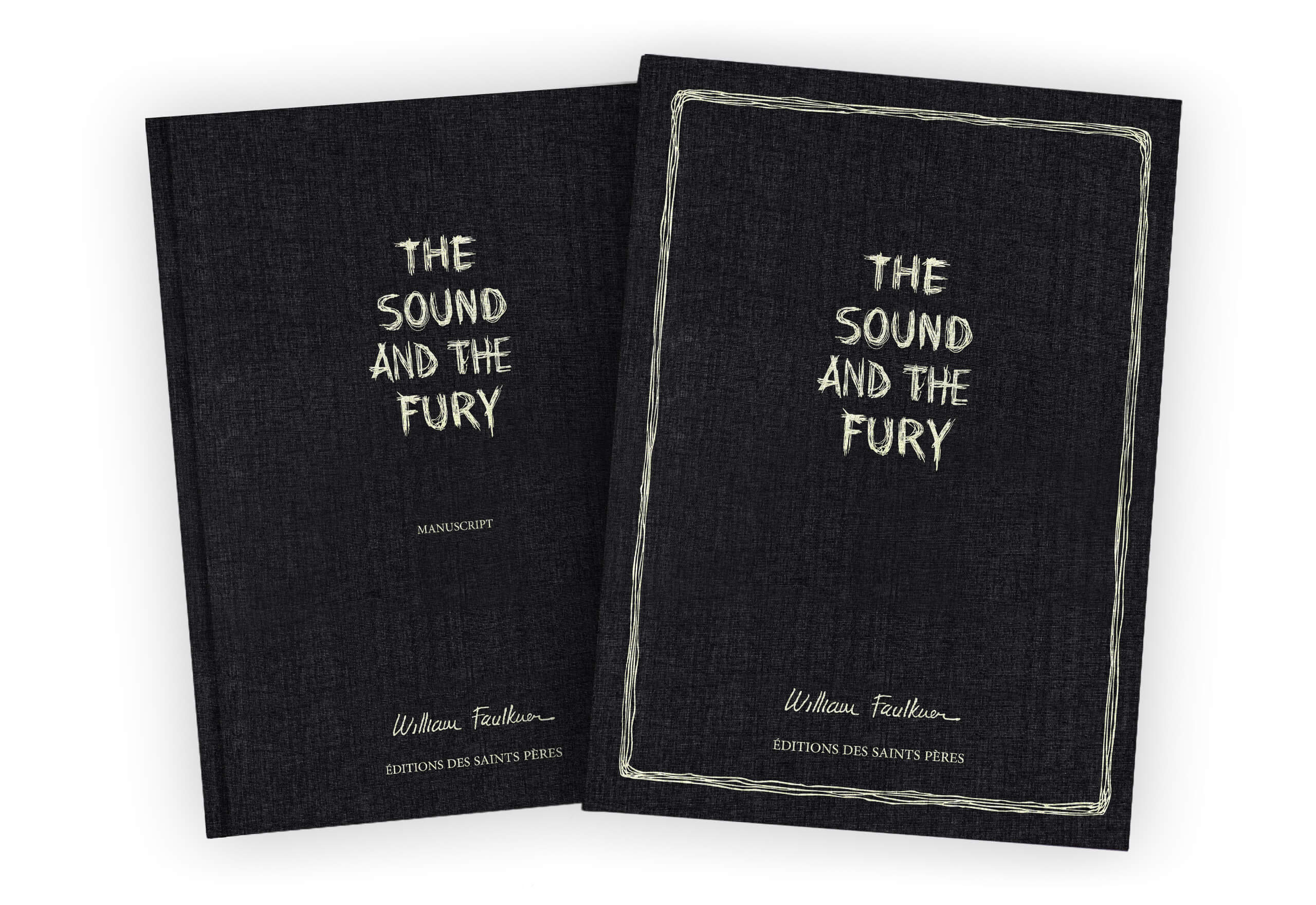
What emerged was The Sound and the Fury, a Southern Gothic family saga that was to become a landmark of Modernist literature. The manuscript has been described as the “centrepiece” of the University of Virginia’s Faulkner collection, acquired after the author’s death in 1962.
The Sound and the Fury follows the lives of the Compson siblings: Benjy, Quentin and Jason and Caddy. Neglected by their parents, the Compson children are raised by Dilsey, an African American servant who becomes the main source of emotional support for the siblings. The first three sections of the novel are recounted by each of the brothers respectively, while the fourth is told by an anonymous third person narrator. Caddy, the only sibling without a dedicated narrative, is nonetheless a central figure to the story, and the events set into motion by her actions form the heart of the plot.
While the tale begins in the ‘present day,’ April 1928, the narrative spans events beginning some thirty years previously. Faulkner later wrote an appendix covering the entire history of the Compson family from 1699 to 1945, which appeared in editions published after 1945.
Deemed a Modernist classic for its stream of consciousness style, non-linear narrative and bold experiments with language and form, the novel was met with little commercial success upon its publication, gradually achieving acclaim as a great American novel, and ultimately contributing to Faulkner’s Nobel Prize for Literature, awarded in 1949.

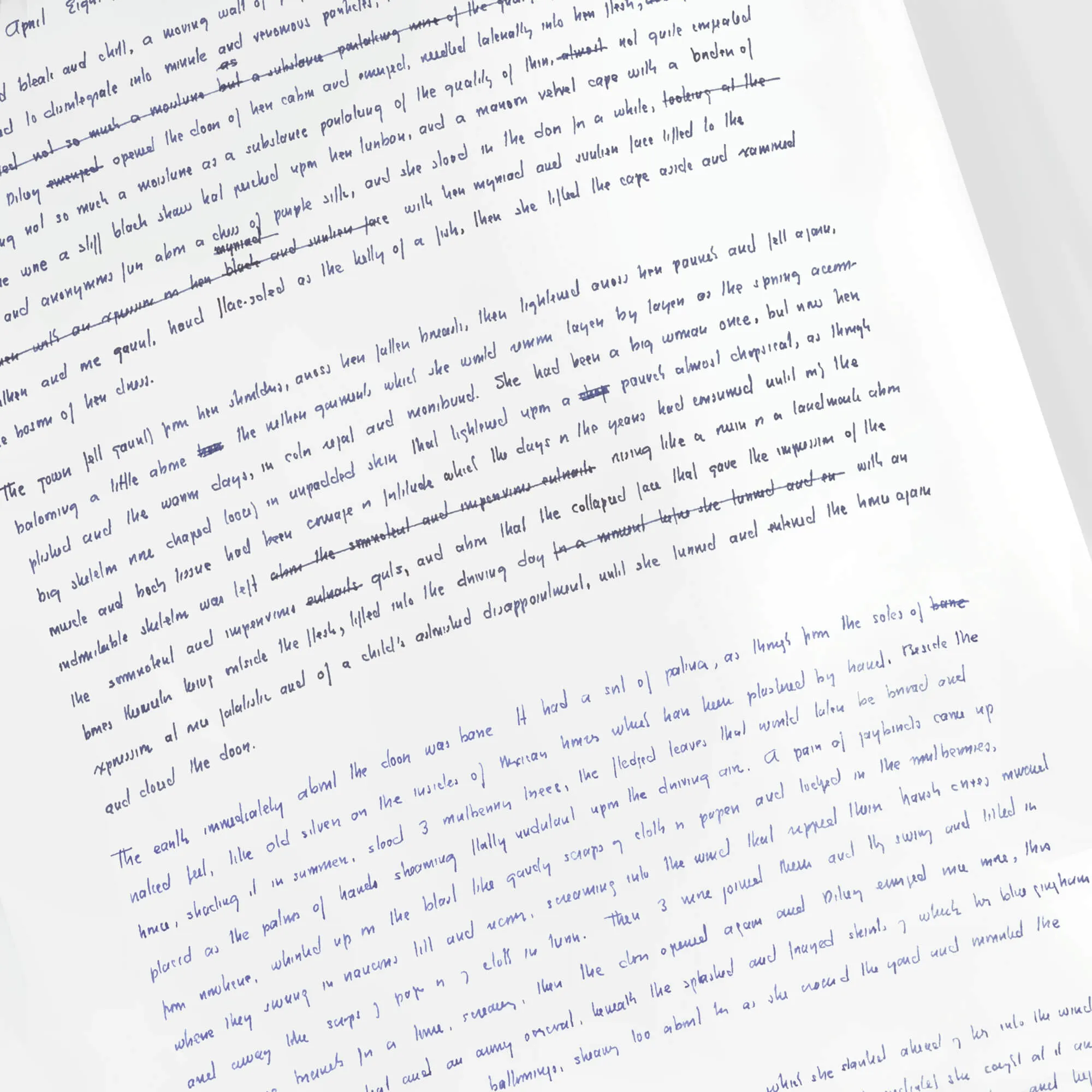
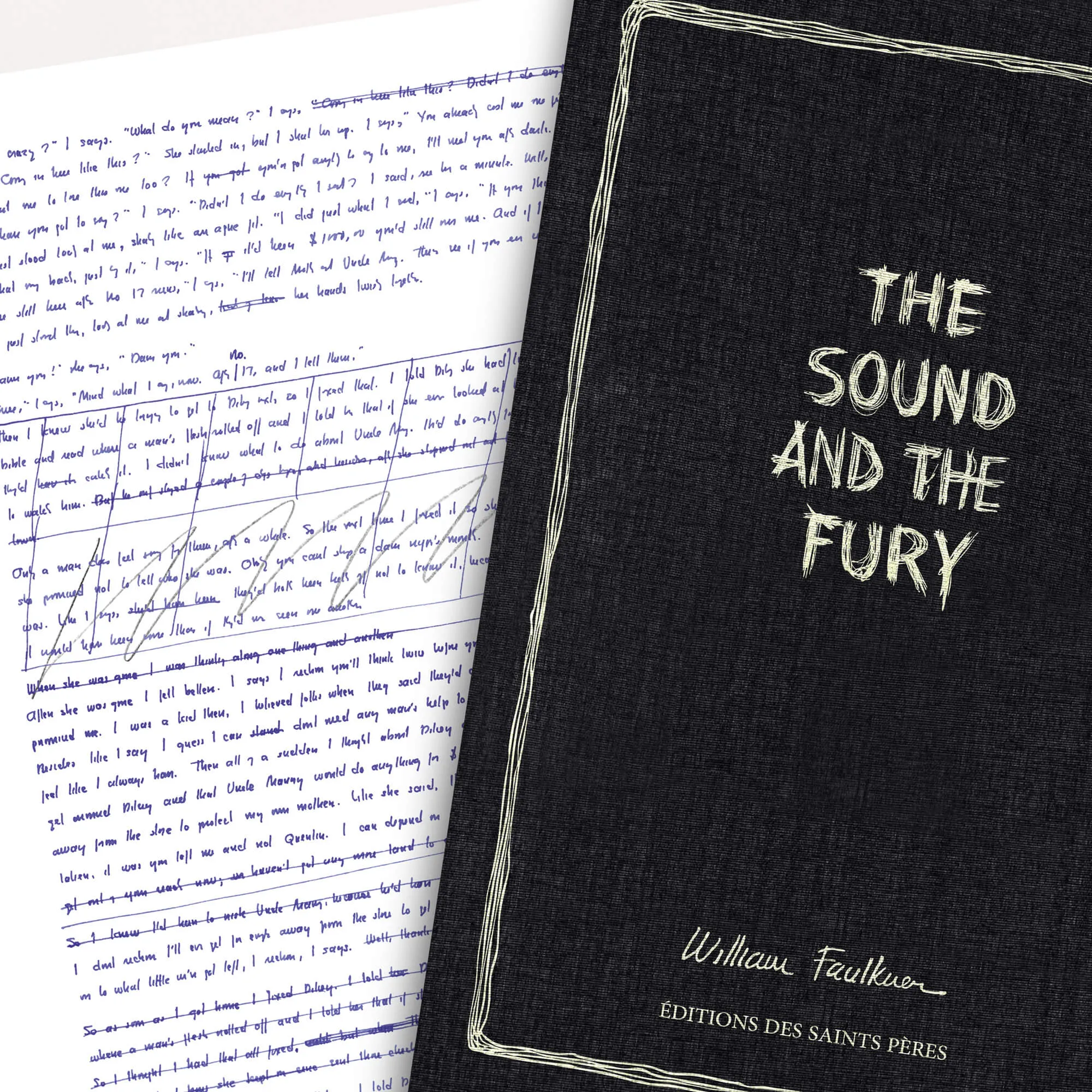
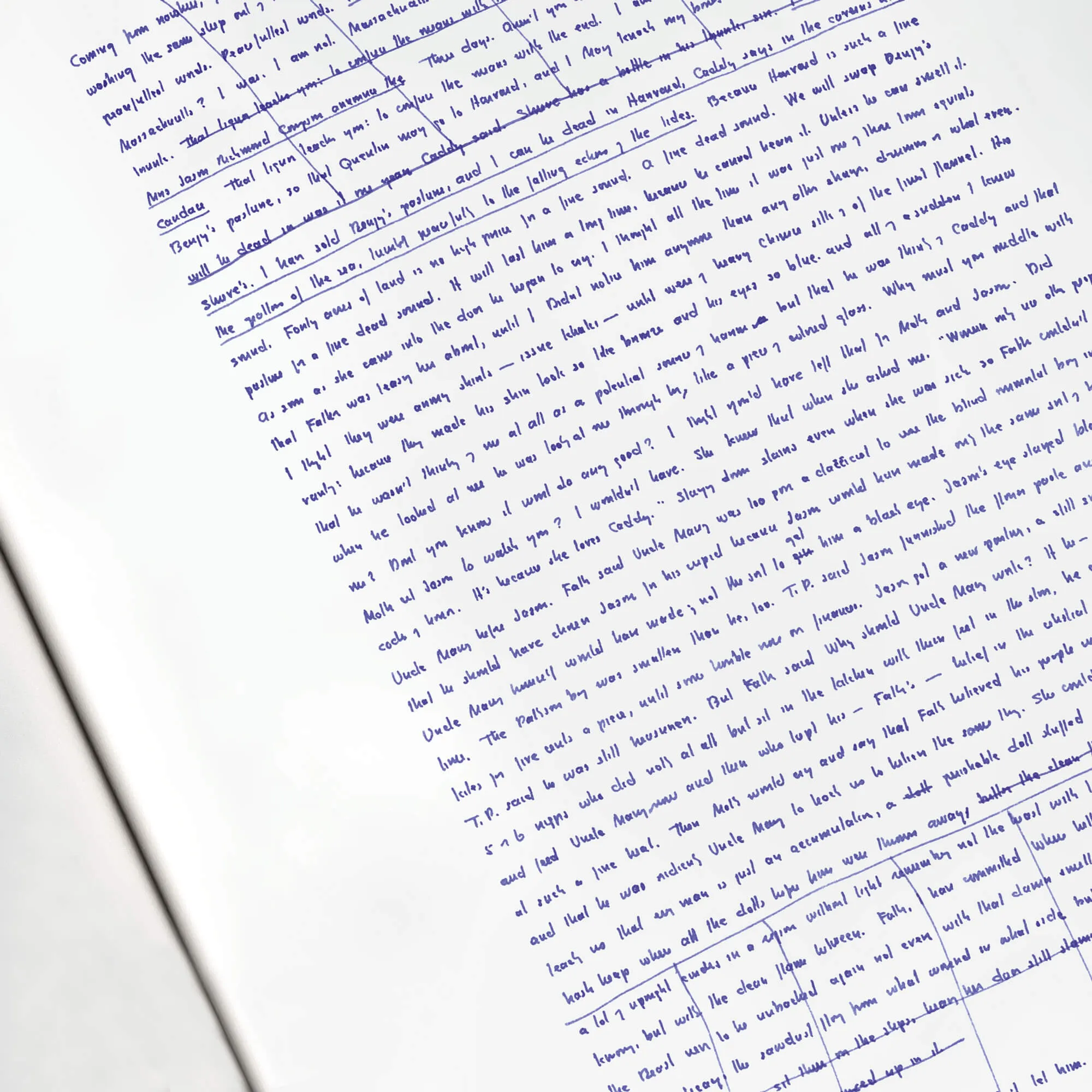
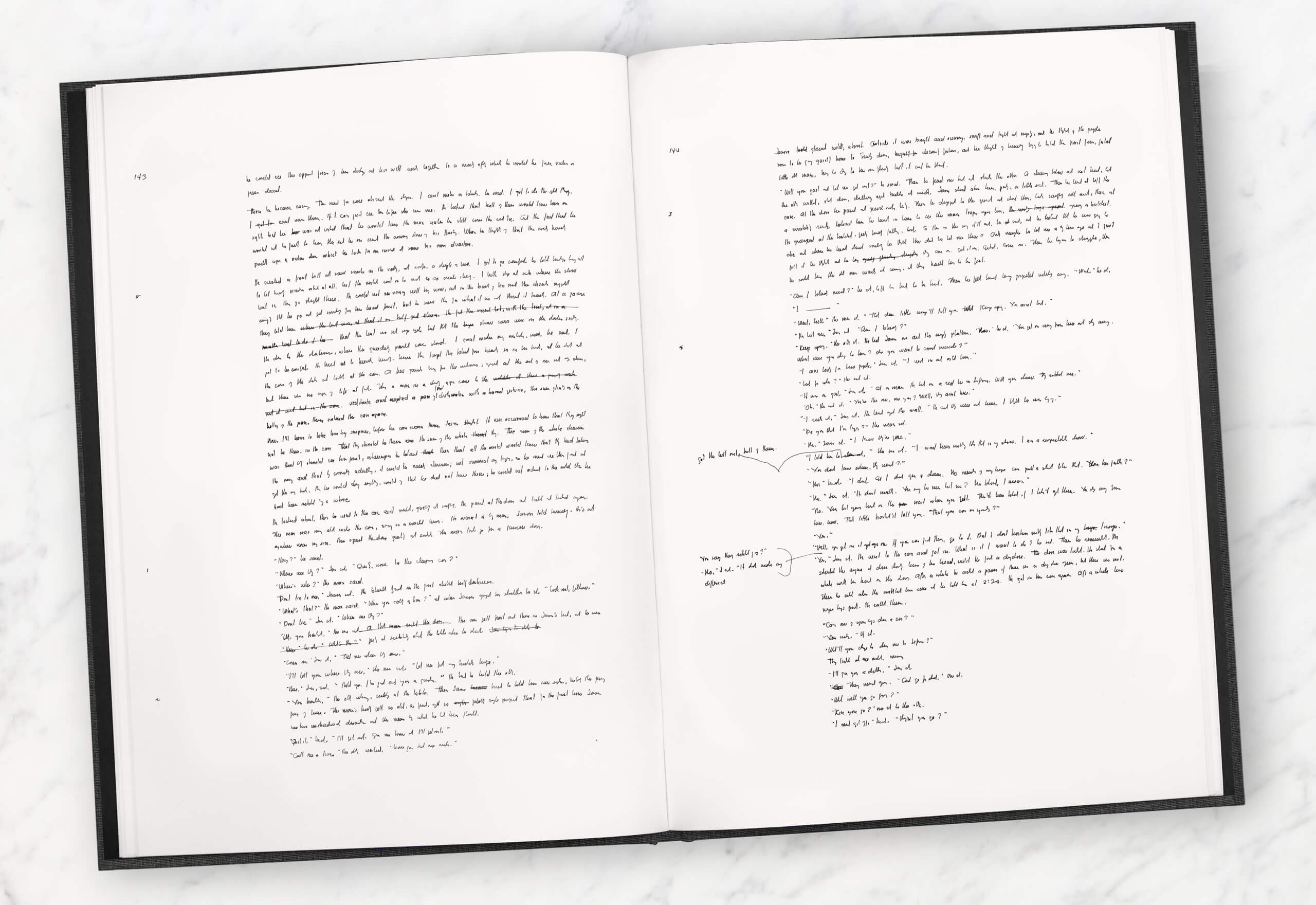
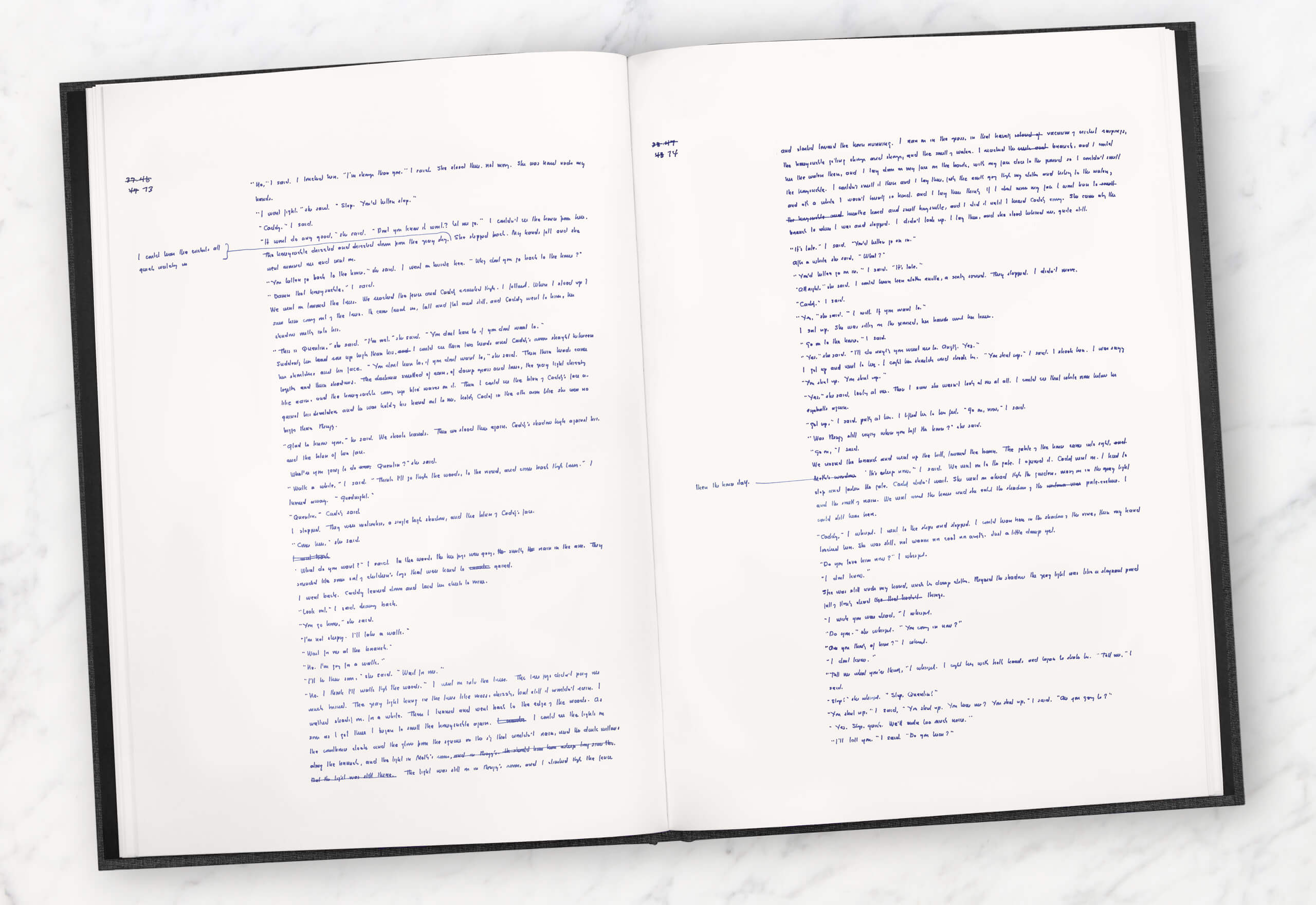
The manuscript for Faulkner’s family saga validates the author’s claim that The Sound and the Fury began as a short story called “Twilight” – indeed, it is this title we find written in Faulkner’s precise and even handwriting on the first page of the manuscript. The quiet tidiness of the hand is even more remarkable considering Faulkner’s recollection of the story as “seem(ing) to explode on the paper before me.” As could be expected for a such an ambitious narrative project, the manuscript features many revisions and additions, but these too appear in an orderly fashion, arranged with near semaphoric precision in the wide margins to the left of each page.
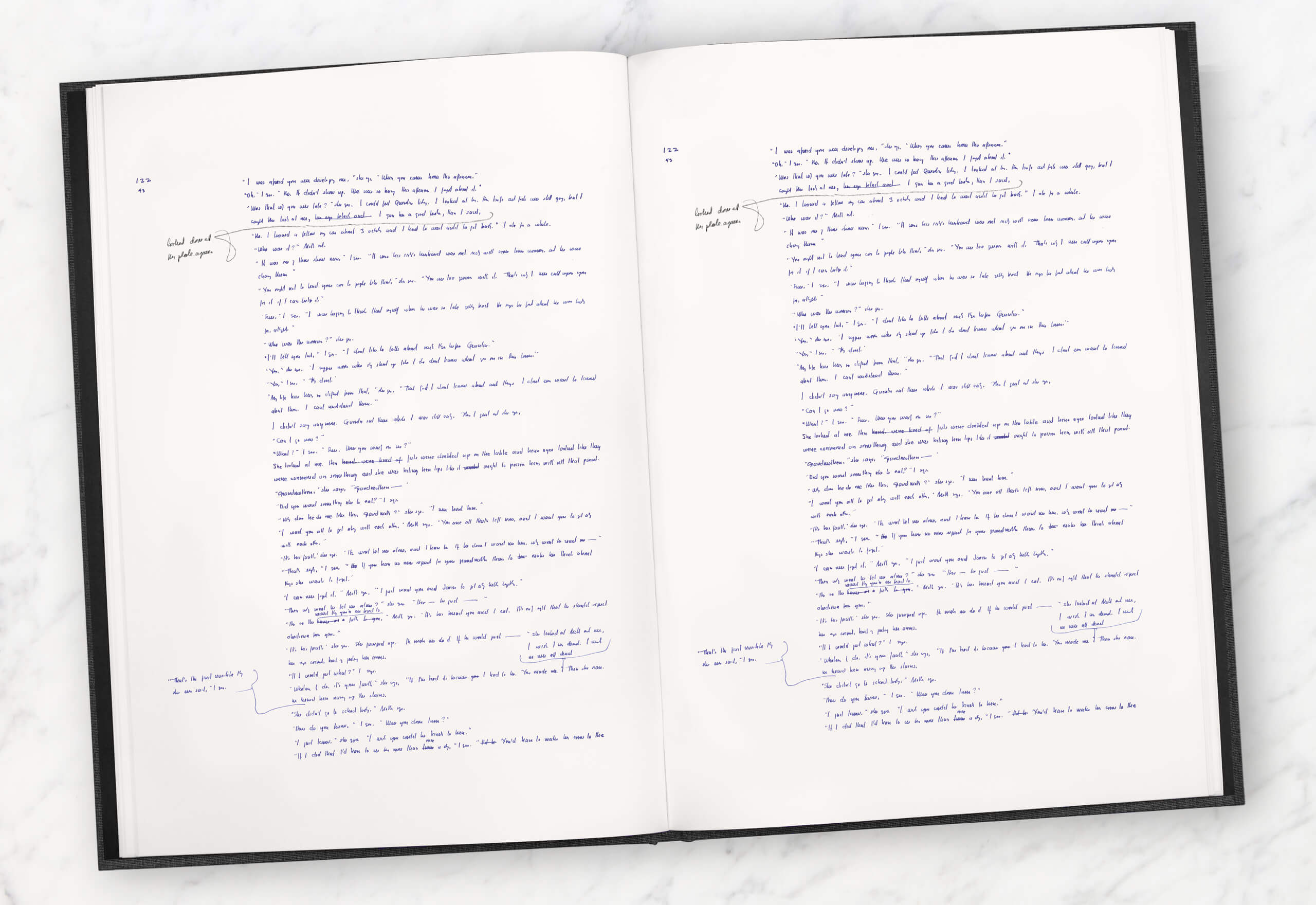
Perhaps the most significant revision appears in the second section, dated June Second, 1910, which initially opened with Quentin’s memory of Benjy’s distress at Caddy’s blossoming maturity (“One minute she was standing there, at the door, looking at me. The next minute Benjy was making that yelling and pulling at her dress.”), a recollection that opens onto six dense pages of conversation. Crossed out page numbers in the corner of the manuscript reveal that Faulkner toyed with several different placements of this crucial passage before situating it toward the end of the novel, where it serves as the prologue to Quentin’s failed attack of Gerald Bland and, from there, to the closing hours of Quentin’s life. As Catherine Kodat reveals in her preface to this edition, Faulkner only decided the final disposition of the passages that would close this section of the novel in the subsequent typescript of the novel.

One passage that remains unchanged from this first draft to the final published work is a pinnacle scene. Faulkner consistently described The Sound and the Fury as being rooted in a single image and a singular approach to reporting it: the image of the child Caddy, her drawers muddied from play in a nearby creek, climbing the tree to look through the window at her grandmother’s funeral while her less-courageous brothers peered up at her from below.
The history of the ownership of the manuscript of The Sound and the Fury is relatively simple to trace, but not without controversy. In 1949, 20-year-old college student Joan Williams was deeply moved after reading Faulkner’s novel, and through a family connection in the author’s hometown of Oxford, Mississippi, managed to arrange a brief meeting with him. Thus began a complicated affair between 51-year-old Faulkner and the young woman, which lasted until 1953 (although the two remained on friendly terms until Faulkner’s death). At some point during their romantic relationship, Faulkner gave Williams the manuscript of The Sound and the Fury but swiftly asked for it back for safe keeping when Williams moved to New York City for work. Faulkner then entrusted the manuscript to Random House editor Saxe Commins, with a covering note affirming his intentions: “Her right to it is not to be challenged… It is my request to you that her right to the manuscript be defended and protected in any situation that may ever arise.” With the manuscript sent by Random House to Princeton for an exhibition and on from there to a show at the University of Virginia, after Faulkner’s death it was included in the sale of his papers to UVA. In 1986 the curator of the Faulkner archive would describe the manuscript of The Sound and the Fury as the collection’s “centrepiece.” Soon thereafter Williams hired attorneys to seek its recovery, citing Faulkner’s letter to Commins as proof of her ownership, but the request was denied by UVA and subsequently settled in a court in favour of the university. Eventually UVA paid Williams $25,000 to resolve the matter and safeguard the collection where the manuscript has since remained; decades later, the collection saw significant expansion when Williams sold them nearly all her letters from Faulkner.
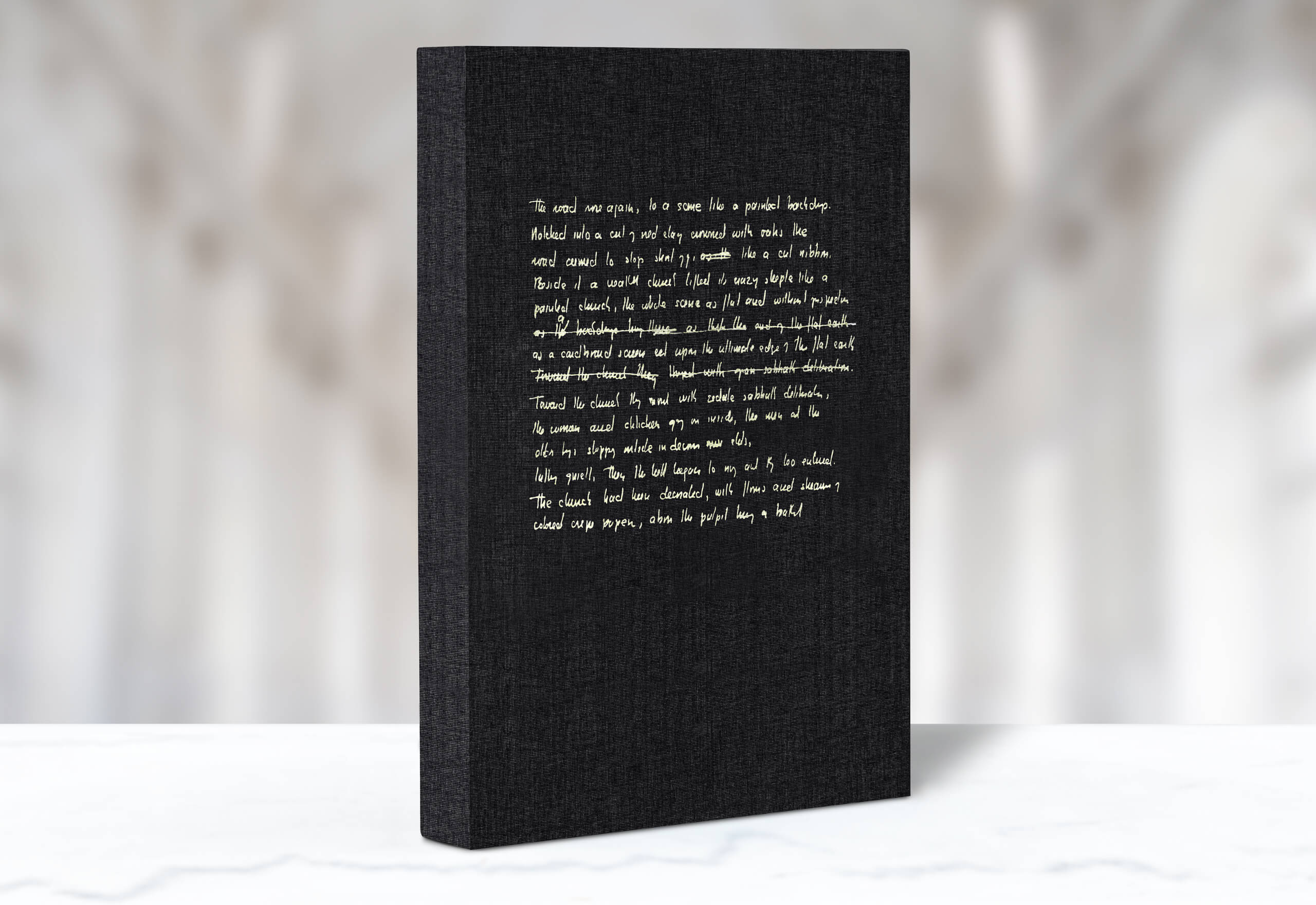
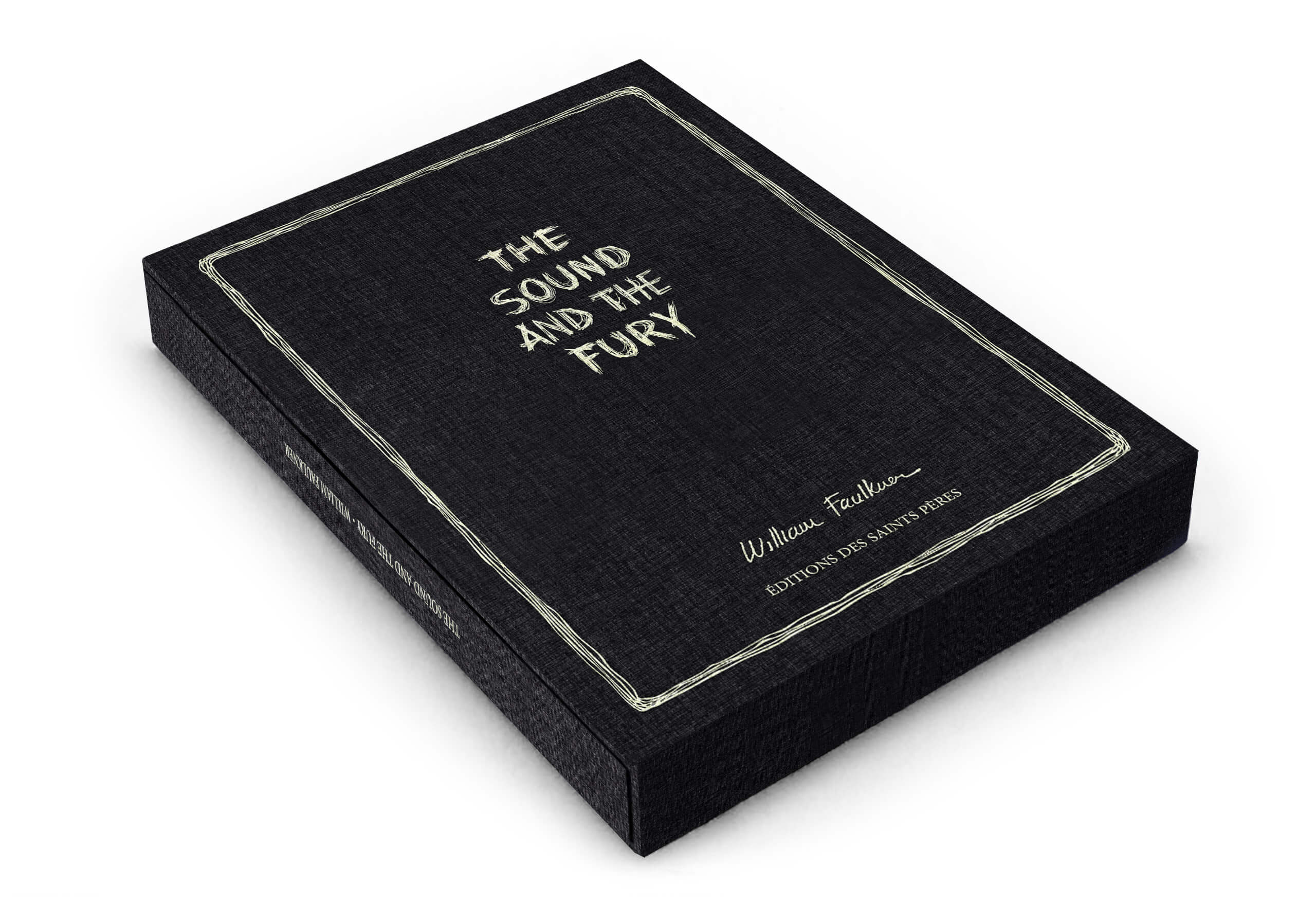
This edition features a preface by Catherine Gunther Kodat. A scholar of 20th century U.S. literature and culture, she has published widely on a variety of subjects, including film, music, and dance as well as the work of William Faulkner. She has taught at Hamilton College and served in administrative roles at Lewis & Clark College, Lawrence University, and Marist University. Her most recent book, Faulknerista, was published in 2022.
This edition also includes a postface by Claude Romano, professor of literature and philosophy at the University Paris-Sorbonne and the Australian Catholic University. He is the author of Le Chant de la vie. Phénoménologie de Faulkner and many academic papers about the author. His recent publications include Être soi-même. Une autre histoire de la philosophie (Gallimard, 2019) L'identité humaine en dialogue (Seuil, 2022) et L'appartenance au monde (Seuil, 2025).
Your review appreciation cannot be sent
Report comment
Report sent
Your report cannot be sent
Write your review
Review sent
Your review cannot be sent


